The Fastest Way for a Contractor to Get More Google Reviews
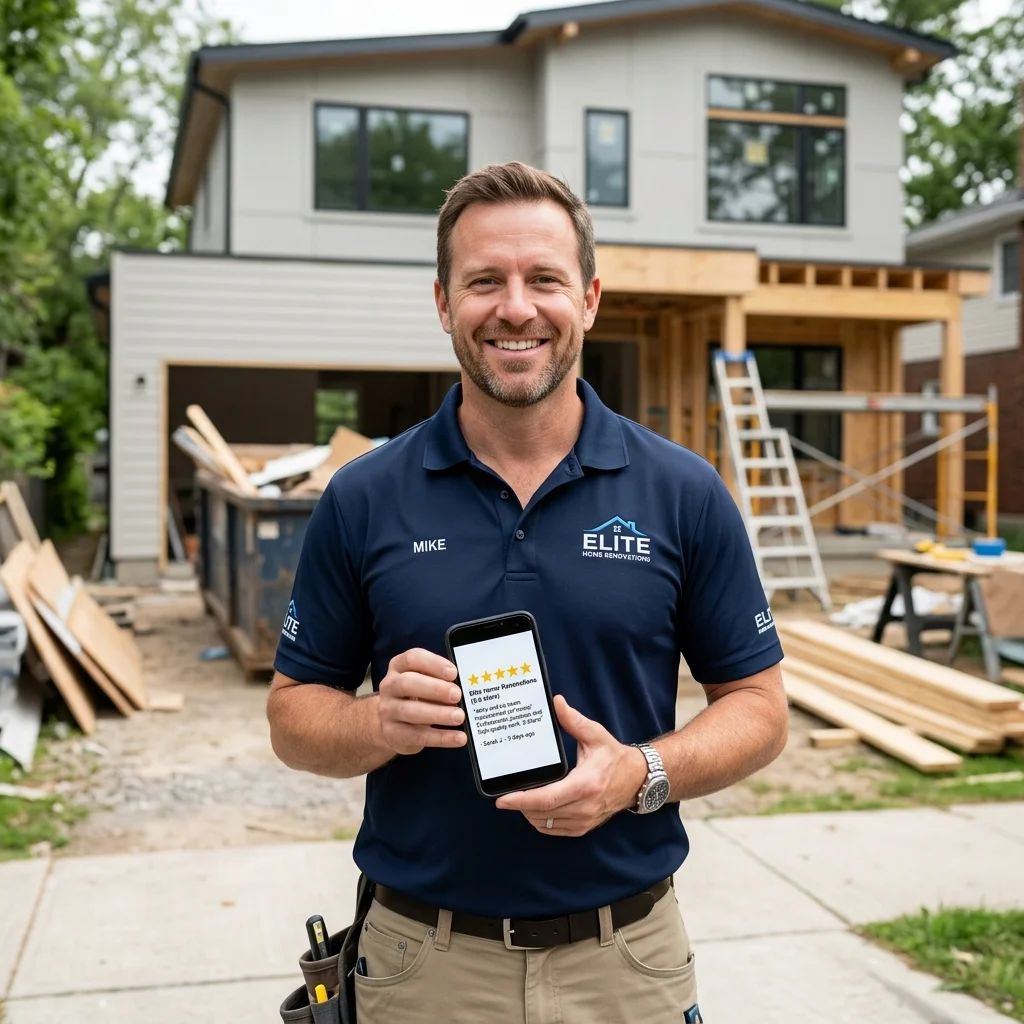
If you're a contractor — plumber, HVAC tech, roofer, electrician, remodeler — and you have fewer than 50 Google reviews, this is the single most important article you'll read about local marketing. Review count and review velocity (how fast new reviews arrive) are two of the strongest ranking signals in Google's local algorithm. Everything else, from your website speed to your schema markup to your Google Business Profile optimization, matters less than whether homeowners see 14 reviews or 140 when they find you on Google Maps.
What is the fastest way for a contractor to get more Google reviews?
The fastest way is to build a simple, repeatable system: create your Google direct review link, then text it to every customer within two hours of finishing the job — never ask verbally, since verbal asks do not convert. Automate the send so it fires when a job is marked complete, follow up once after 48 hours, and respond to every review you get. Run consistently, this produces 8 to 16 new reviews per month.
Why Reviews Matter More for Contractors Than Almost Any Other Business
Contractors have a trust problem most businesses don't. A homeowner hiring a plumber or remodeler is inviting a stranger into their home to do expensive work they can't evaluate themselves. They can't tell whether the work is good until it's done — and sometimes not even then. Reviews are the proxy for competence and trustworthiness. They're the only signal a homeowner has before making the call.
Google shows your star rating and review count directly in the local pack. A homeowner searching "plumber near me" sees three businesses with their ratings visible before clicking on any of them. The business with 127 reviews at 4.8 stars gets the tap. The one with 9 reviews at 5.0 stars gets skipped — not because the rating is lower, but because the sample size doesn't feel trustworthy.
The System: How to Build Review Velocity Without Being Annoying
Most contractors know they should ask for reviews. Almost none do it consistently. The reason is always the same: you're on a job site, you finish the work, the homeowner's happy, you shake hands, get in the truck, and drive to the next job. The window to ask closes the moment you pull out of the driveway.
So take yourself out of it. Build a system that does the asking for you.
Step 1: Create Your Direct Review Link
Google provides a direct link that takes someone straight to the review form for your business — no searching, no navigating. To find yours:
- Search for your business on Google.
- Click "Write a review" on your own listing.
- Copy the URL from your browser.
Alternatively, go to your Google Business Profile dashboard, find the "Ask for reviews" section, and copy the short link Google provides. Save this link. It's the foundation of the entire system.
Step 2: Text It — Do Not Ask Verbally
Verbal asks don't convert. A homeowner who says "sure, I'll leave you a review" forgets within an hour. They meant it — they just got busy. The fix is a text sent within two hours of finishing the job, while the experience is still fresh.
The text should be short, personal, and include the direct link:
"Hey [name], thanks for having us out today. If you were happy with the work, a quick Google review means a lot to a small business like ours: [direct review link]. Thanks again."
That's it. No essay to write, no guilt trip. One sentence, one link, one tap.
Step 3: Automate the Send
If you're doing 3 to 5 jobs per day, you won't remember to send a text after every one. That's where automation comes in. There are two levels:
Basic automation: Use your phone's text message scheduling feature or a free SMS tool to pre-write the template. After each job, paste in the customer name and hit send. Total effort: 15 seconds per job.
Full automation: Integrate an automated review request system with your CRM or job management software. When a job is marked complete, the system automatically texts the customer with a personalized review request. Follow-up reminders go out 48 hours later to non-responders. This is what Great North AI Partners sets up as part of our local SEO service for contractors — it runs in the background with zero effort from you after initial setup.
Step 4: Follow Up Once
Most customers need a nudge. If the first text doesn't get a review within 48 hours, one follow-up is appropriate:
"Hey [name], just a quick follow-up — if you have a minute, that Google review would really help us out: [direct review link]. No pressure either way. Thanks!"
Two texts total. Never more. You want reviews, not resentment.
Step 5: Respond to Every Review You Get
This step works on two fronts: Google's algorithm and customer relations. Google has confirmed that business responsiveness to reviews is a ranking signal. Responding to every review — positive and negative — tells Google that your business is active and engaged. It also tells future customers that you care.
For positive reviews, a simple thank-you with the customer's name is sufficient. For negative reviews, a professional response that acknowledges the concern and offers to make it right demonstrates maturity. Never argue in a review response. Every future customer will read it.
The Numbers: What Consistent Review Capture Looks Like
A contractor completing 15 jobs per week who texts every customer should expect a conversion rate of 15 to 25 percent. That means 2 to 4 new Google reviews per week, or 8 to 16 per month. In six months, that's 50 to 100 new reviews — enough to fundamentally change your local pack positioning in most markets.
For context, the majority of contractors in any given market have fewer than 30 total Google reviews. Reaching 100 puts you in the top tier of review authority in virtually every local market in the country.
Common Objections
- "I don't want to bother my customers." You're not bothering them. You did a good job, they're happy, and a two-sentence text with a link takes them 30 seconds. Most people are genuinely willing to help a small business — they just need to be asked at the right moment.
- "What if I get a bad review?" You'll eventually get one. It's unavoidable. A single negative review in a sea of 100 positive ones doesn't hurt you. In fact, a perfect 5.0 rating with only positive reviews can look suspicious. What matters is your response and your overall volume.
- "I already have 5 stars, why do I need more reviews?" Because review count and recency matter as much as star rating. A 5.0 with 12 reviews from 2023 ranks lower and converts worse than a 4.8 with 150 reviews from the past six months. Google wants to see that your business is actively delivering good work right now.
The Bottom Line
Getting more Google reviews isn't a marketing strategy. It's the marketing strategy for a local contractor. It costs nothing, it takes 15 seconds per job, and the compounding effect on your local search visibility is bigger than any other single move you can make. Build the system, run it consistently, and the reviews do the rest.
Frequently asked questions
What is the fastest way for a contractor to get more Google reviews?add
Build a simple system: create your Google direct review link, then text it to every customer within two hours of completing the job while the experience is still fresh. Verbal asks don't convert because customers forget within an hour. Automate the send, follow up once after 48 hours, and respond to every review. Run consistently, this produces 8 to 16 new reviews per month.
Why are Google reviews so important for contractors?add
Review count and review velocity are two of the strongest ranking signals in Google's local algorithm, and contractors face a unique trust problem because homeowners can't evaluate the work before hiring. Google shows your star rating and review count directly in the local pack, so a business with 127 reviews at 4.8 stars gets the tap while one with 9 reviews at 5.0 stars gets skipped because the sample size doesn't feel trustworthy.
Should I ask for reviews verbally or by text?add
Text, not verbally. A homeowner who says they'll leave a review forgets within an hour because they get busy. Send a short, personal text message within two hours of completing the job that includes your direct review link. The message should be one sentence, one link, one tap with no essay, instructions, or guilt.
How many times should I follow up for a review?add
Just once. If the first text doesn't get a review within 48 hours, send a single polite follow-up that includes the direct review link and a no-pressure tone. Two texts total, never more. You want reviews, not resentment.
How many Google reviews can a contractor realistically get each month?add
A contractor completing 15 jobs per week who texts every customer should expect a conversion rate of 15 to 25 percent, which is 2 to 4 new reviews per week or 8 to 16 per month. Over six months that's 50 to 100 new reviews, enough to fundamentally change local pack positioning in most markets, since most contractors have fewer than 30 total reviews.
Do I need to respond to my Google reviews?add
Yes. Google has confirmed that business responsiveness to reviews is a ranking signal, so responding to every review, positive and negative, tells Google your business is active and engaged. For positive reviews, a simple thank-you with the customer's name is enough. For negative reviews, respond professionally, acknowledge the concern, and never argue, because every future customer will read it.
About Aaron Jaqua
Aaron is the founder of Great North AI Partners, helping local service businesses across Michigan and the US gain visibility in Google Maps and Google AI Overviews using performance-first builds and local SEO.